
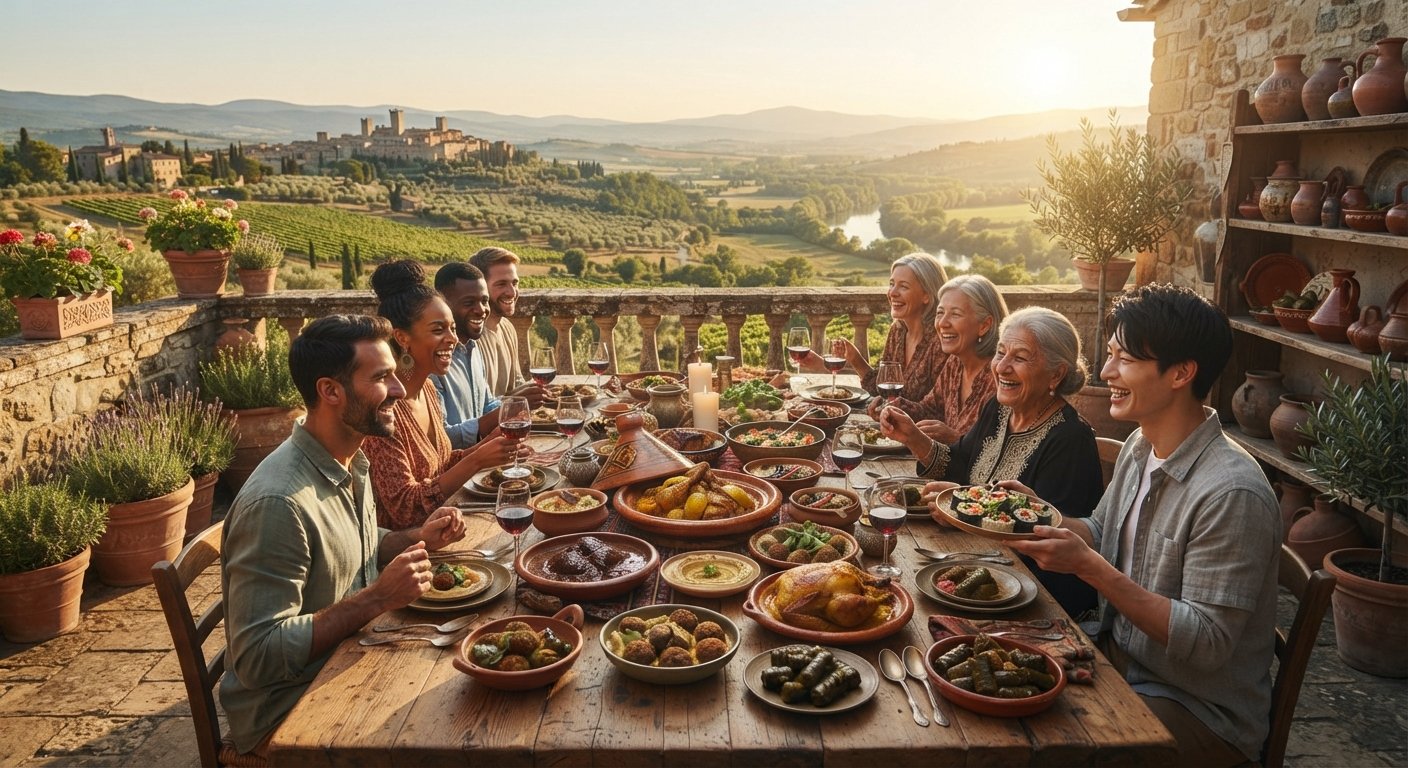
A Seat At The Table
How aromas, plating, and shared meals tell stories that span generations, connecting people to history, identity, and one another.
Beyond the Plate: The Stories We Serve
How aroma, presentation, ritual, and shared experiences transform dining into one of culture’s most enduring forms of storytelling.
Some stories are written in books. Others are passed through generations around a table.
Long before recipes were documented or culinary schools existed, culture was preserved through food. Every ingredient, cooking technique, serving vessel, and dining ritual carried meaning. Across continents and centuries, meals have served as expressions of identity, community, celebration, resilience, and belonging.
To understand a culture, one need only observe how its people gather to eat.
The experience begins long before the first bite. It starts with aroma.
The scent of spices slowly blooming in warm oil, bread emerging from an oven, herbs crushed by hand, or a simmering family recipe can evoke memories more powerfully than photographs. Aroma has a unique ability to connect people to place and time, transporting them to childhood kitchens, holiday gatherings, and moments shared with loved ones. In many cultures, these familiar scents are not merely invitations to dine; they are invitations to remember.
Yet dining is equally a visual language.
Presentation, often referred to as plating, reflects cultural values as much as culinary skill. In some traditions, balance and simplicity are celebrated. In others, abundance and vibrant color symbolize generosity and hospitality. The arrangement of food on a plate communicates respect for ingredients, appreciation for craftsmanship, and gratitude toward guests.
Every detail tells a story.
The handcrafted pottery of a rural village. The communal platter placed at the center of a family gathering. The ceremonial tea service that turns a beverage into an act of mindfulness. The heirloom recipe prepared exactly as it was decades ago. These elements transform food from sustenance into experience.
“The most memorable meals are not defined by what was served, but by the stories, traditions, and people gathered around the table.”
Throughout history, communities have used dining as a way to strengthen social bonds. Weddings, harvest celebrations, religious observances, and family milestones often find their center in a shared meal. The table becomes a place where wisdom is exchanged, history is preserved, and relationships are nurtured.
Today, as culinary traditions continue to evolve, chefs and home cooks alike are finding innovative ways to honor heritage while embracing contemporary influences. Ancient techniques meet modern creativity. Local ingredients tell global stories. Cultural boundaries blur while traditions remain respected.
In a rapidly changing world, food remains one of humanity’s most powerful connectors.
It reminds us where we come from, introduces us to unfamiliar perspectives, and creates opportunities for understanding across cultures. Whether enjoyed at a bustling market, an elegant dining room, or a family kitchen, every meal offers a glimpse into the values and experiences of the people who prepared it.
And perhaps that is the true significance of dining culture.
Not simply what is on the plate, but what it represents.
Bring it home.


Vegetable Chopper & Slicer Set
Vegetable Chopper & Slicer Set


12 Piece Serving Utensils Set, 18/10 Stainless Steel Hostess Utensils
12 Piece Serving Utensils Set
Tell the story of your block.
Neighborhood stories are the point. Share yours with the ND Community.
